
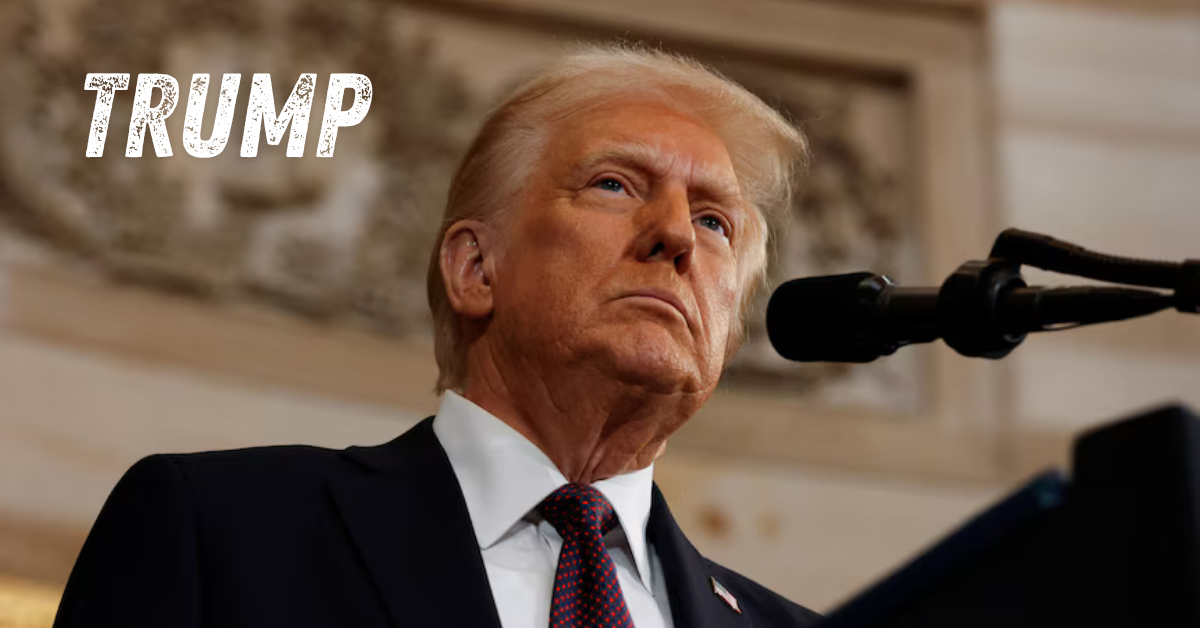
The story of Donald John Trump begins long before his name became synonymous with politics and global headlines. Born on June 14, 1946, in Queens, New York City, Trump was the fourth of five children of Fred and Mary Anne MacLeod Trump. His father was a prominent real estate developer who specialized in building affordable housing for middle-class families, while his mother was a Scottish immigrant from the Isle of Lewis. From an early age, Trump displayed strong ambition, competitiveness, and a drive to stand out—traits that would define his entire life journey.
Early Life and Education
Growing up in the Jamaica Estates neighborhood of Queens, young Donald Trump was known for his energy and assertiveness. His parents enrolled him at the Kew-Forest School, but due to behavioral challenges, he was later sent to the New York Military Academy at the age of 13. The disciplined environment helped channel his drive and instilled leadership qualities that he would carry forward into adulthood.
After graduating from the academy in 1964, Trump attended Fordham University for two years before transferring to the Wharton School of Finance at the University of Pennsylvania, one of the most prestigious business schools in the country. In 1968, he graduated with a degree in economics, ready to enter the world of business with a combination of education, confidence, and a desire to make a name for himself.
Trump’s Entry into the Business World
Donald Trump joined his father’s company, Elizabeth Trump & Son, which focused primarily on residential real estate in Brooklyn and Queens. However, Trump’s vision extended far beyond New York’s outer boroughs. He saw Manhattan as the center of power, wealth, and opportunity. In 1971, he took control of the company and renamed it The Trump Organization. His first major project was the revitalization of the Grand Hyatt Hotel, which transformed a decaying building near Grand Central Terminal into one of the city’s premier hotels. This marked the beginning of the Trump brand—a name associated with luxury, opulence, and ambition.
Rise as a Real Estate Mogul
Throughout the late 1970s and 1980s, Trump became one of New York City’s most visible and controversial businessmen. He built and managed iconic properties such as Trump Tower on Fifth Avenue, a 68-story skyscraper completed in 1983 that housed luxury apartments, retail shops, and his corporate offices. The building symbolized his success and became an emblem of his persona—bold, extravagant, and unapologetically self-promotional.
Trump’s portfolio expanded rapidly. He invested in casinos and hotels in Atlantic City, including the Trump Plaza, Trump Castle, and the Trump Taj Mahal. He purchased the Plaza Hotel in Manhattan and developed golf courses, residential buildings, and resorts worldwide. His ventures also included an airline, Trump Shuttle, and a series of licensing deals that used his name as a premium brand.
Financial Challenges and Recovery
Trump’s aggressive expansion during the 1980s led to severe financial troubles by the early 1990s. The real estate market collapsed, and his companies faced billions in debt. Several of his businesses filed for bankruptcy, and Trump himself came close to personal financial ruin. However, through renegotiations with banks and creditors, he managed to survive. This period of recovery became a testament to his resilience and his ability to rebrand and rebuild his image in the public eye.
Despite his setbacks, Trump maintained his status as a celebrity businessman. His name continued to appear in the media, and he leveraged that attention to expand his personal brand through books, interviews, and public appearances.
Trump in Media and Entertainment
In the early 2000s, Donald Trump reinvented himself as a television personality. He became the host and executive producer of the reality TV show The Apprentice, which premiered in 2004. The program featured aspiring entrepreneurs competing for a position in Trump’s company, and his catchphrase, “You’re fired,” became a cultural phenomenon. The show’s success made him a household name beyond the business world, transforming him into a pop culture icon.
Trump’s media presence extended beyond television. He wrote several books on business and success, including The Art of the Deal (1987), which became a bestseller. His larger-than-life image, combined with his straightforward communication style, made him one of the most recognized figures in American media.
Trump’s Entry into Politics
Donald Trump’s political views had long been public. Over the years, he expressed opinions on economic issues, foreign policy, and American identity, but it was not until 2015 that he officially announced his candidacy for President of the United States. Running as a Republican, he presented himself as an outsider—someone who was not part of the political establishment but who understood business, negotiation, and leadership.
His campaign slogan, “Make America Great Again,” resonated with many voters who felt left behind by globalization, government bureaucracy, and traditional politics. His direct, often controversial rhetoric attracted widespread media coverage, both positive and negative. Against all odds, Donald Trump won the 2016 presidential election, defeating Democratic candidate Hillary Clinton and becoming the 45th President of the United States.
The Trump Presidency: Policies and Leadership
Trump’s presidency was one of the most eventful and polarizing in modern American history. His administration pursued a range of significant policy changes. Among his accomplishments were major tax reforms, including the Tax Cuts and Jobs Act of 2017, efforts to reduce federal regulations, and renegotiation of trade deals such as NAFTA, which was replaced with the United States-Mexico-Canada Agreement (USMCA).
He appointed three justices to the U.S. Supreme Court—Neil Gorsuch, Brett Kavanaugh, and Amy Coney Barrett—cementing a conservative majority that would influence American law for decades. His foreign policy focused on a more nationalist approach, including tariffs on Chinese goods, renegotiation of international agreements, and direct meetings with North Korean leader Kim Jong Un.
His administration was also marked by controversy and division. He faced two impeachment trials—first in 2019 over Ukraine-related charges and again in 2021 following the events of January 6 at the U.S. Capitol. He was acquitted both times. Supporters praised his tough stance on immigration, economic growth, and “America First” diplomacy, while critics accused him of promoting division and undermining democratic norms.
Global Influence and Legacy
Trump’s influence extended well beyond U.S. borders. His unorthodox approach to diplomacy, his emphasis on national sovereignty, and his willingness to challenge traditional alliances reshaped how the world viewed American power. His presidency inspired a wave of populist movements in other countries, while simultaneously drawing sharp criticism from global leaders and institutions.
Regardless of political opinion, he changed how communication worked in politics. His frequent use of social media, especially Twitter, allowed him to bypass traditional media channels and speak directly to millions. This strategy became a new model for political engagement in the digital age.
Personal Life and Family
Donald personal life has always been closely followed by the public. He has been married three times: first to Ivana Trump, with whom he had three children—Donald Jr., Ivanka, and Eric; then to Marla Maples, with whom he has a daughter, Tiffany; and finally to Melania Trump, the former First Lady, with whom he has a son, Barron. His family has played key roles in both his business and political life, often appearing alongside him at major events.
His personal brand expanded into multiple industries, including golf courses, luxury hotels, and merchandise. The Trump Organization became a symbol of his global reach, managing properties and licensing deals across several continents.
Return to Politics and Continued Influence
After losing the 2020 presidential election to Joe Biden, he remained a dominant figure in American politics. He continued to hold rallies, endorse candidates, and shape the direction of the Republican Party. In 2024, Trump once again ran for president and won, making history as the 47th President of the United States—only the second individual ever to serve non-consecutive terms after Grover Cleveland.
His return to the White House reignited debates about his leadership, his policies, and his enduring impact on both American and global politics.
Challenges and Legal Issues
Donald’s career has been shadowed by numerous controversies and legal battles. From business bankruptcies in his earlier years to lawsuits and investigations involving his finances, taxes, and political conduct, his public life has never been free from scrutiny. Despite these challenges, he has maintained a loyal base of supporters who admire his resilience, confidence, and refusal to back down from confrontation.
These legal and ethical struggles, while divisive, have only added to the complexity of his story—one that continues to unfold.
Legacy and Historical Significance
Donald legacy remains one of the most debated topics in modern history. To his supporters, he is a fearless leader who challenged the establishment, revitalized the economy, and prioritized national interests. To his critics, he is a deeply polarizing figure whose rhetoric and actions tested the limits of democracy. Regardless of one’s view, Donald influence on the 21st century is undeniable.
From a business magnate and television star to a two-time president, his journey reflects the changing landscape of American ambition and power. His story embodies the intersections of media, politics, celebrity, and influence—showing how personal brand and leadership can redefine history.
FAQs
Q: When was he born?
A: He was born on June 14, 1946, in Queens, New York City.
Q: How did Donald Trump start his business career?
A: After studying at the Wharton School, he joined his father’s real estate business, later renaming it The Trump Organization and expanding it into Manhattan.
Q: How many times has Donald Trump been President?
A: He served as the 45th President from 2017 to 2021 and became the 47th President in 2025.
Q: What controversies has Trump faced?
A: He has faced multiple controversies, including two impeachments, business lawsuits, and investigations into his political activities.
Q: What is The Trump Organization?
A: It is the Trump family’s real estate and business empire, managing global properties, hotels, golf courses, and branding ventures.
Final Thought
The story of Donald Trump is one of ambition, controversy, and resilience. From his early days in Queens to his rise as a billionaire businessman, television personality, and twice-elected U.S. president, his journey illustrates how personal vision and branding can shape global influence. Whether admired or criticized, his life remains a reflection of modern power—where business, media, and politics converge into a single, unforgettable legacy.